All the works of Jan van Eyck after 1436 bear the echo of the pathos of objectivity, which in such a sharp form was manifested in the painting “The Canon
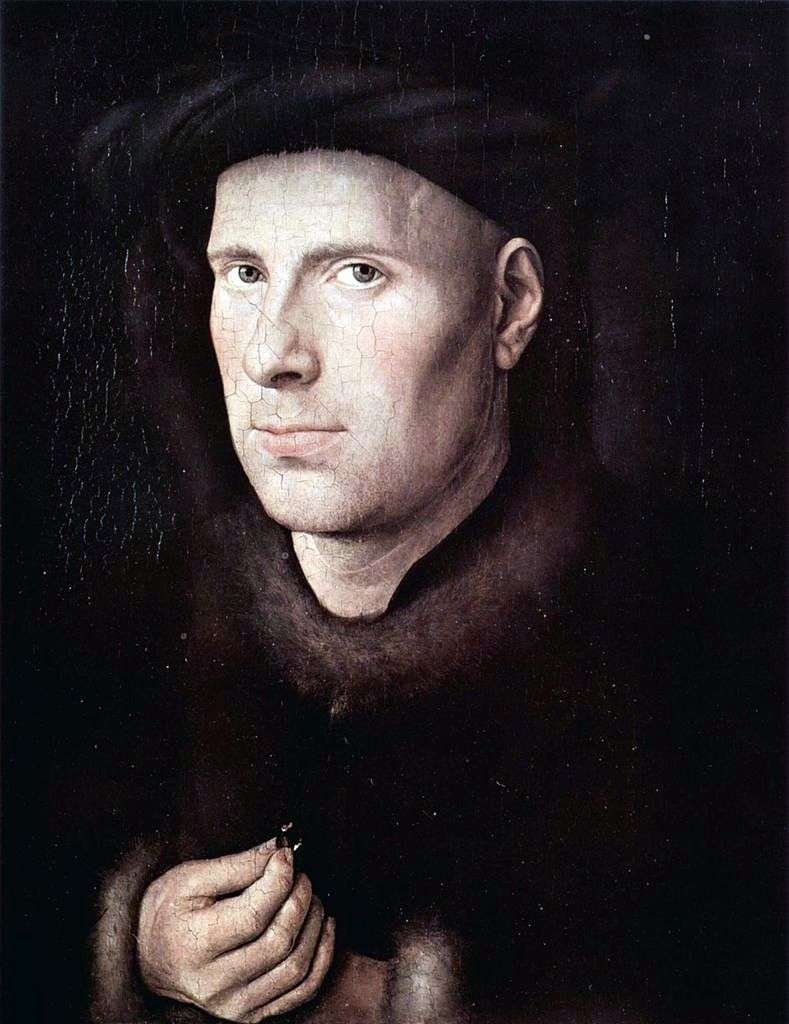
All the works of Jan van Eyck after 1436 bear the echo of the pathos of objectivity, which in such a sharp form was manifested in the painting “The Canon
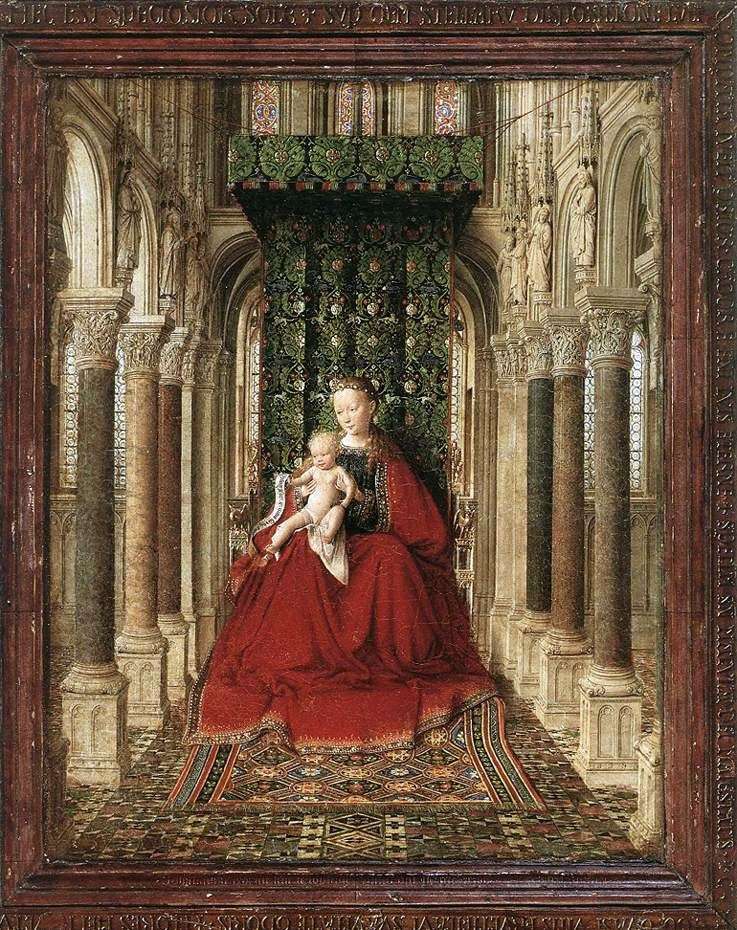
This is a small-sized work – a true masterpiece of Dutch art of the XV century. In the central part of the triptych – the Virgin Mary with the Child
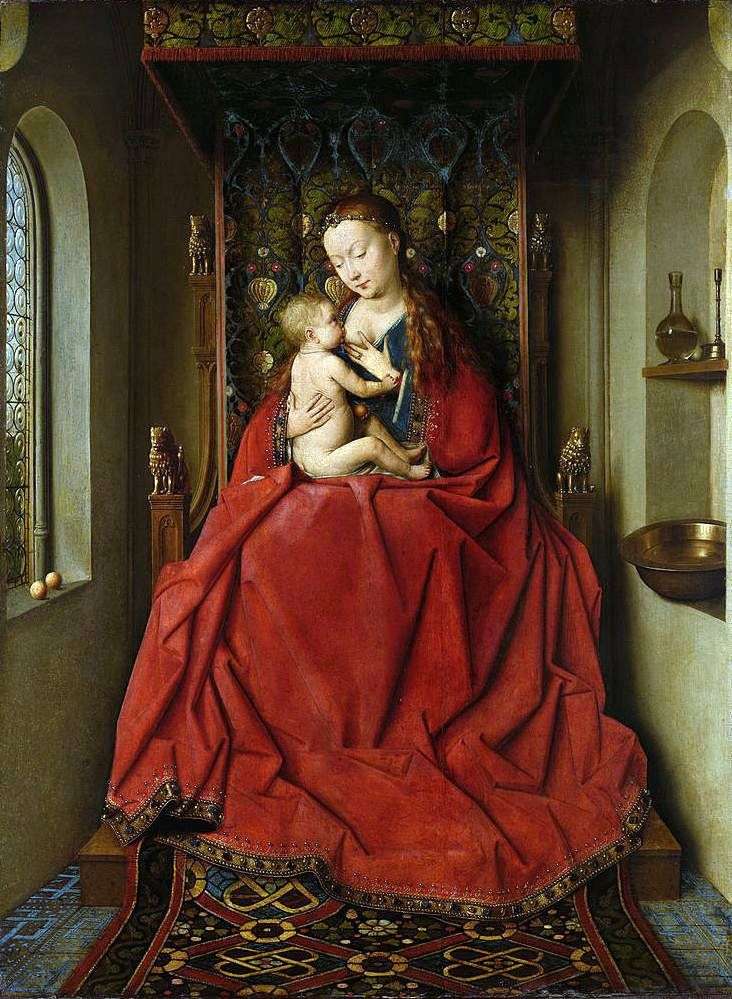
The painting “Lucca Madonna” or otherwise “Maria nursing” written by artist Jan van Eyck around 1430. The fundamental role of the idea of the beauty of the universe as the
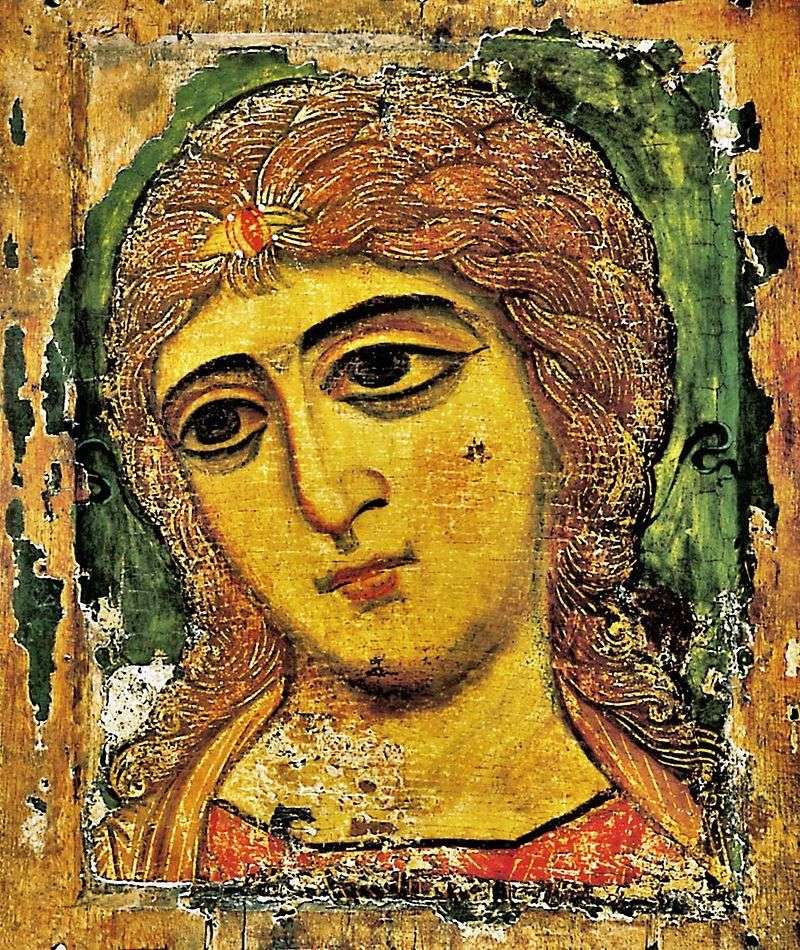
Archangel Gabriel, from the main Deesis Tier XII century. Wood, pavoloka, gesso, egg tempera. 48,8 х 38,8 х 2,8 The oldest icon in the collection of the Russian Museum, one
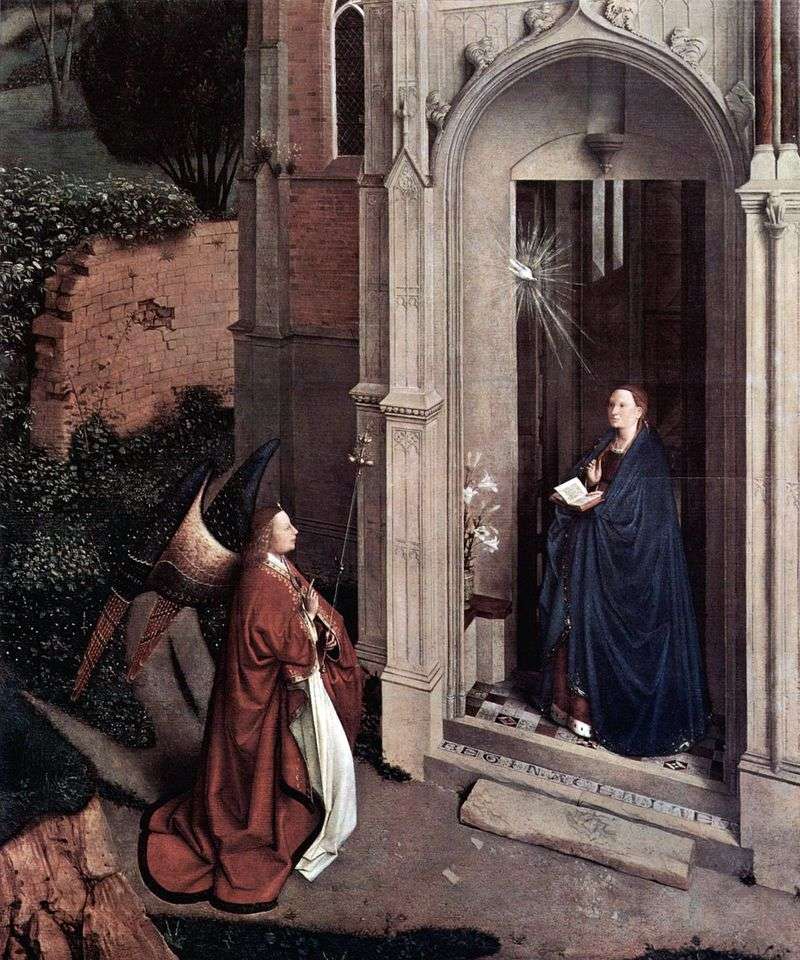
Painting by Jan van Eyck “The Annunciation”. In the Dutch art of the 20s of the 15th century, the greatest accuracy in the transfer of nature and objects of human
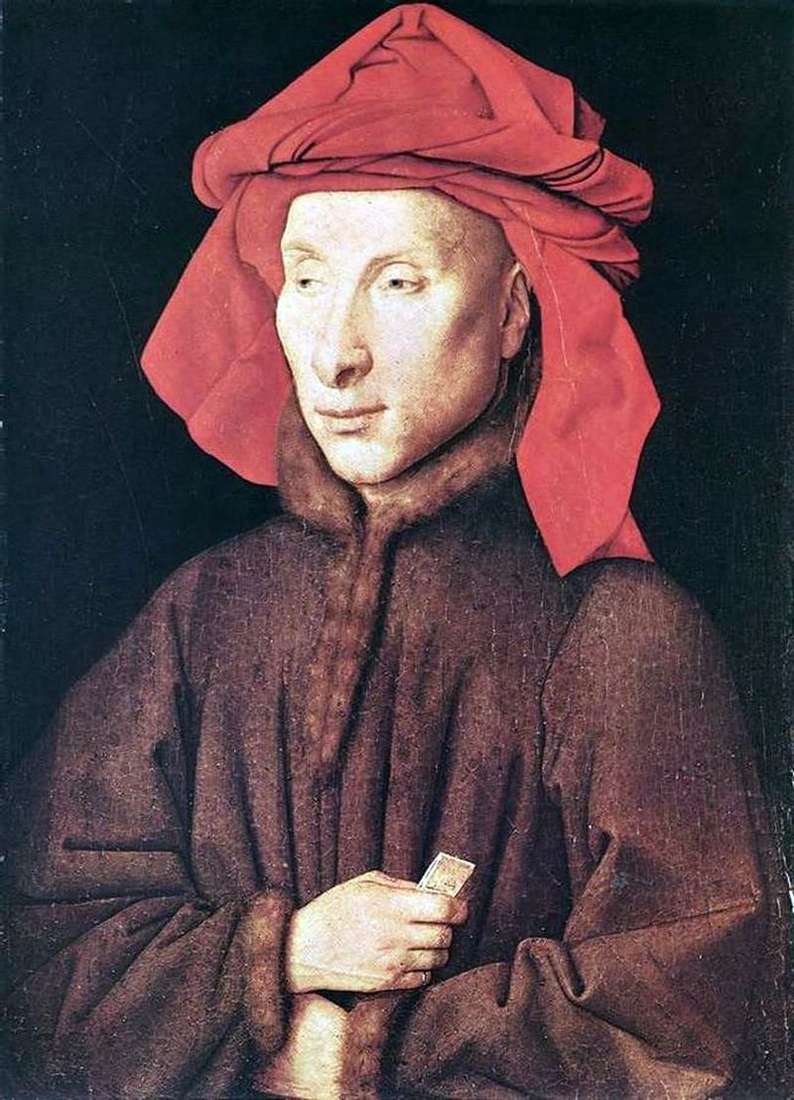
The portrait of a rich Italian merchant, a friend of Van Eyck, was performed at the same time, when the famous “Portrait of the Arnolfini Four”
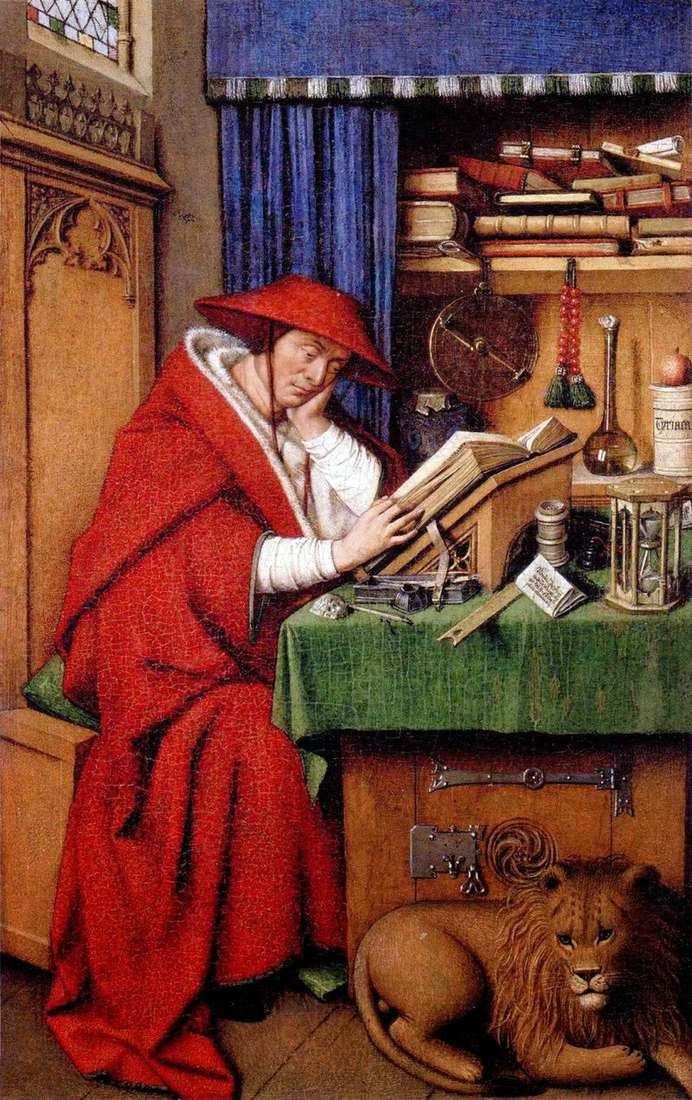
The date of the painting, says that she was finished by the artist’s friends, a year after his death, although it is established – the main part is done by
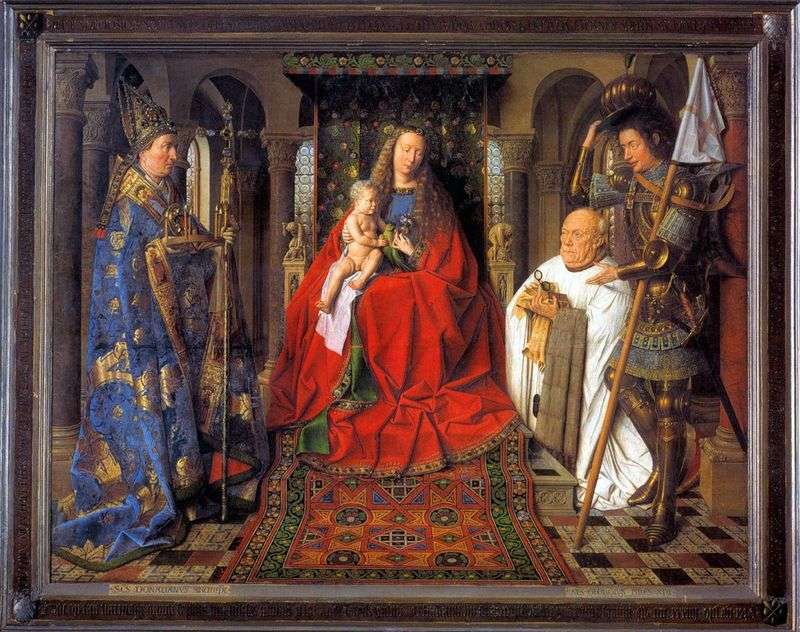
The customer of the painting was the canon van der Palet. As in the “Madonna of Chancellor Rolina,” Van Eyck is trying to show the presence of the divine in
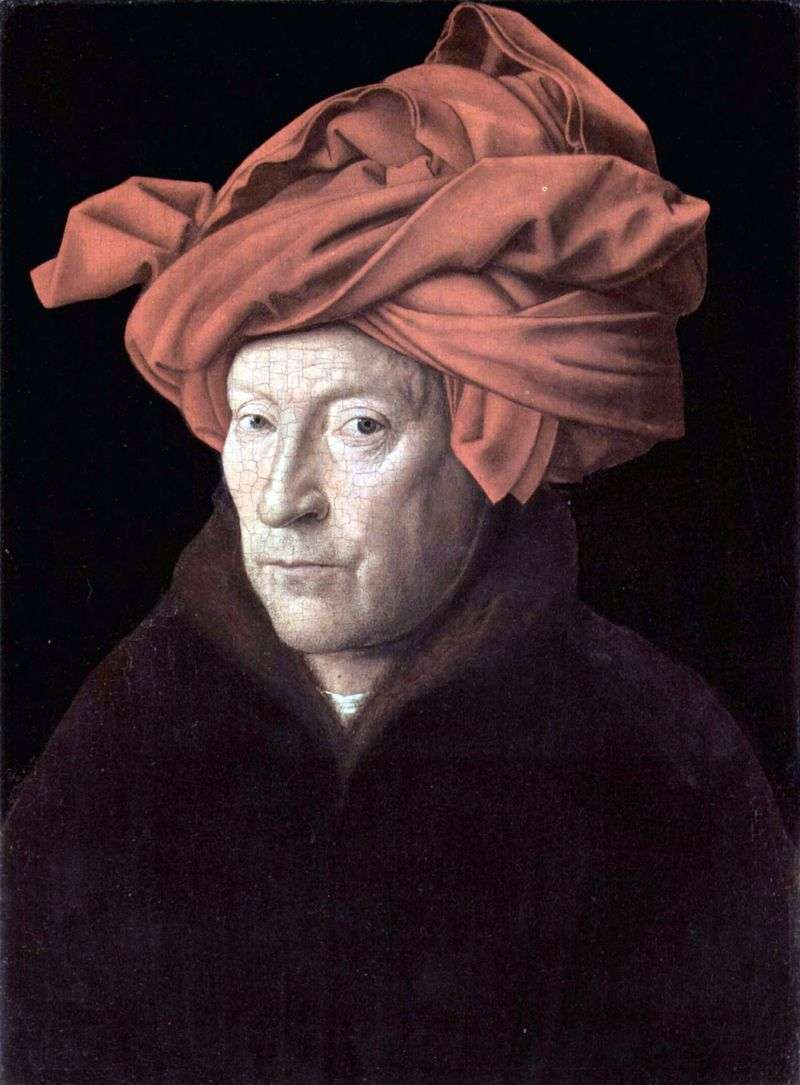
The first manifestations of Renaissance art in the Netherlands date back to the beginning of the 15th century. Dutch masters in the 14th century enjoyed great popularity in Western Europe,
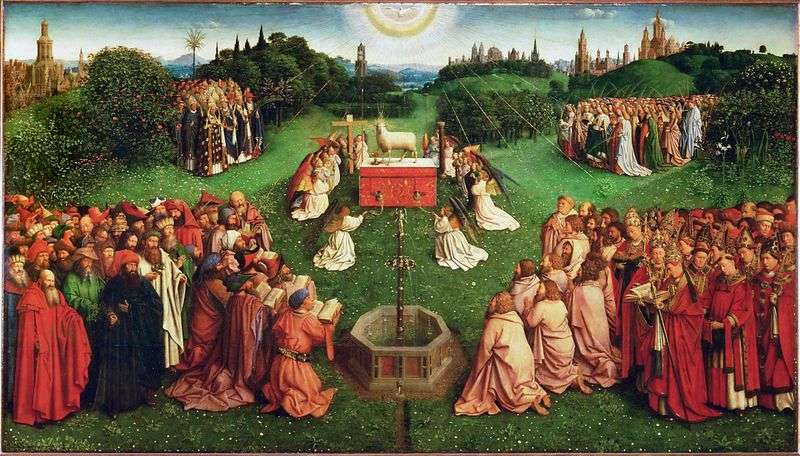
“The worship of the lamb” is the heart of the altar. There is nothing meaningful and sad in this traditional scene. The lamb, from the neck of which is poured
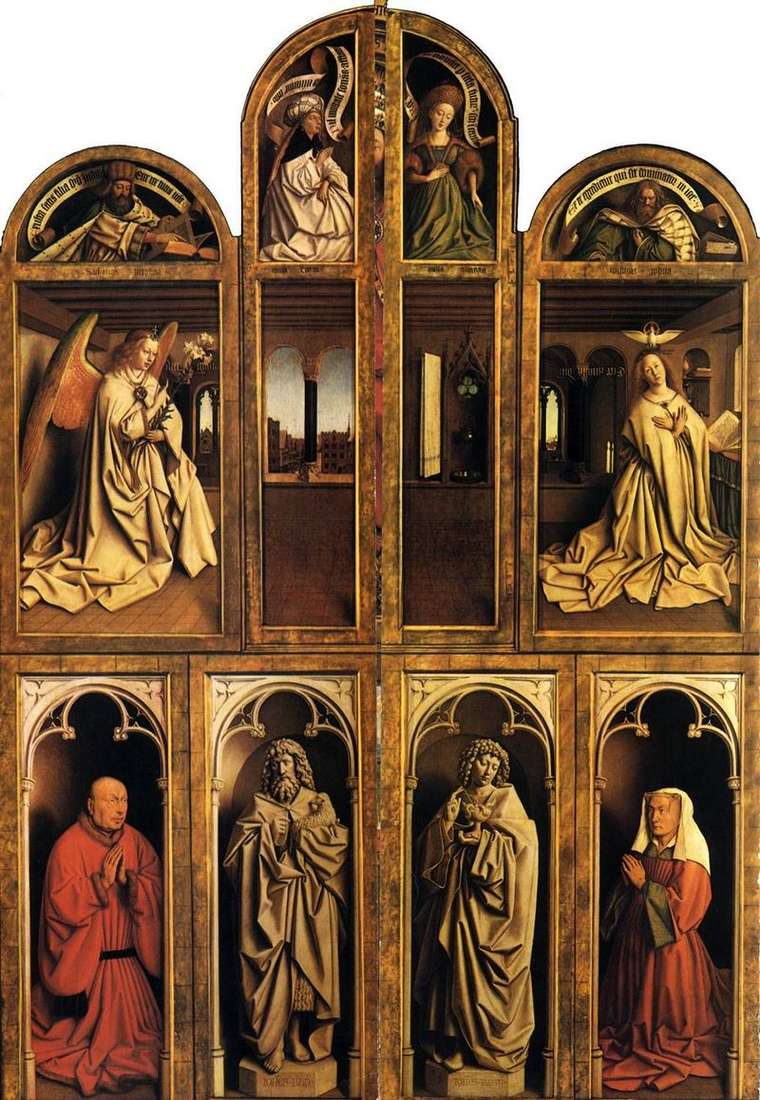
In the closed state, the altar resembles a room above an underground chapel. In fact, it is located above the ground in the castle with a view of the city
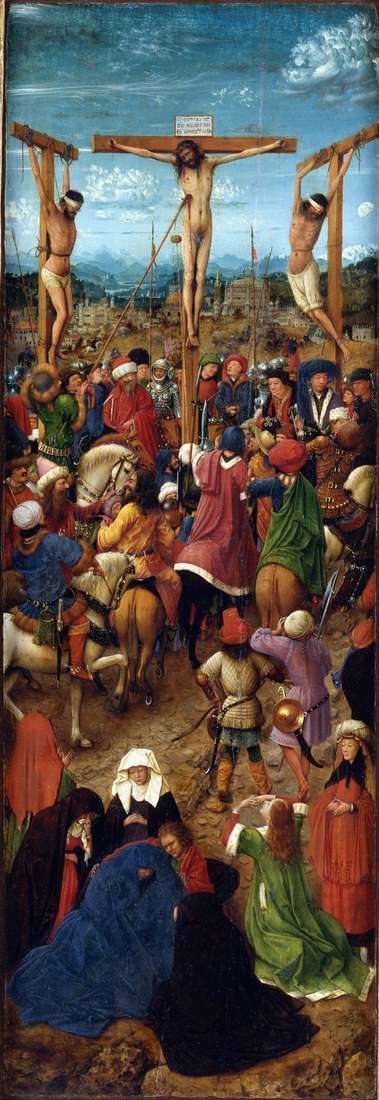
It is believed that the left wing of the diptych “Crucifixion” was written by the Dutch painter Jan van Eyck in the 20s of the 15th century. Other historians of
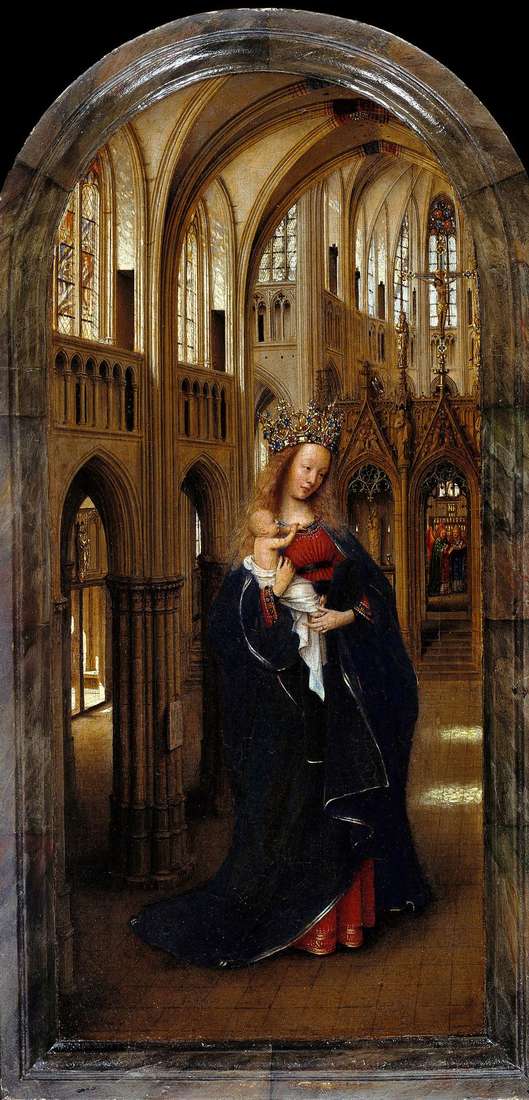
In the painting by Jan van Eyck “The Madonna in the Church,” specific field observations take up an enormous amount of space. Previous European art did not know such vital-natural
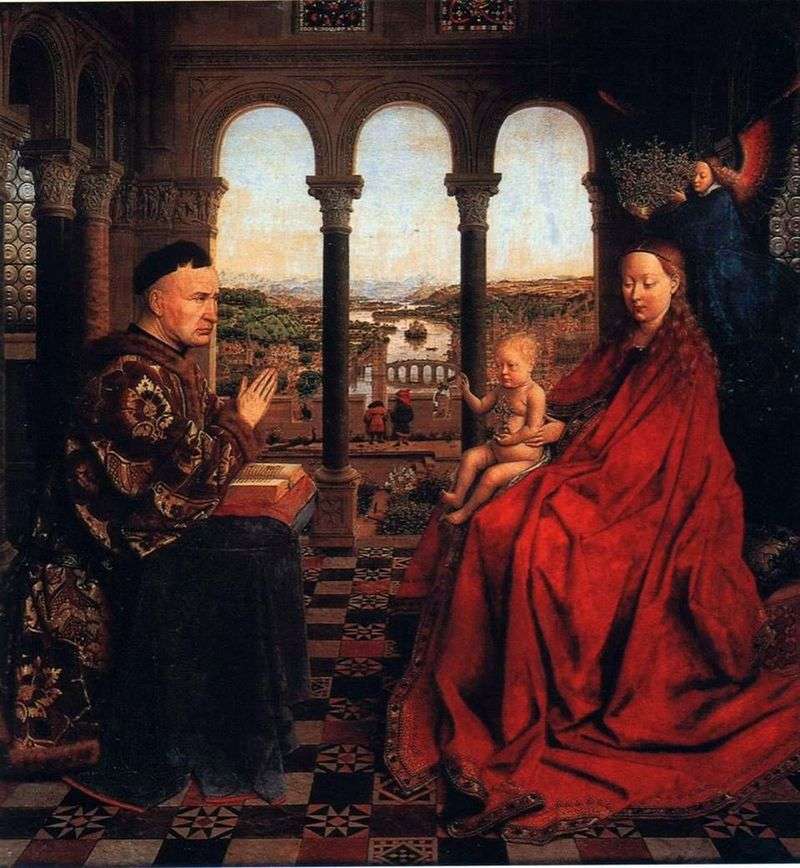
The first documentary information about this painting dates back to 1778. It is not signed, but most experts agree that its author, no doubt, was Jan van Eyck. The work
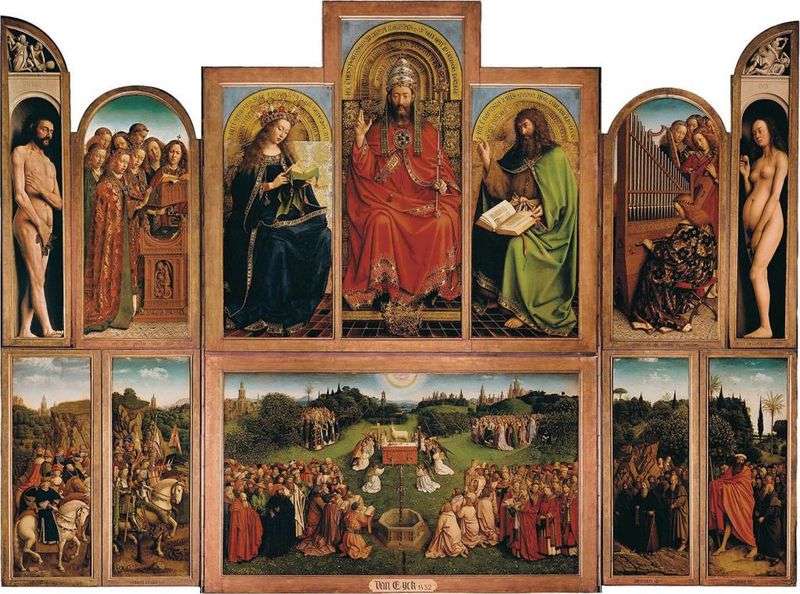
This is how the altar looks on holidays, when the doors are open. In the picture of the upper row: God the Father, reigning over all around. He solemnly sits
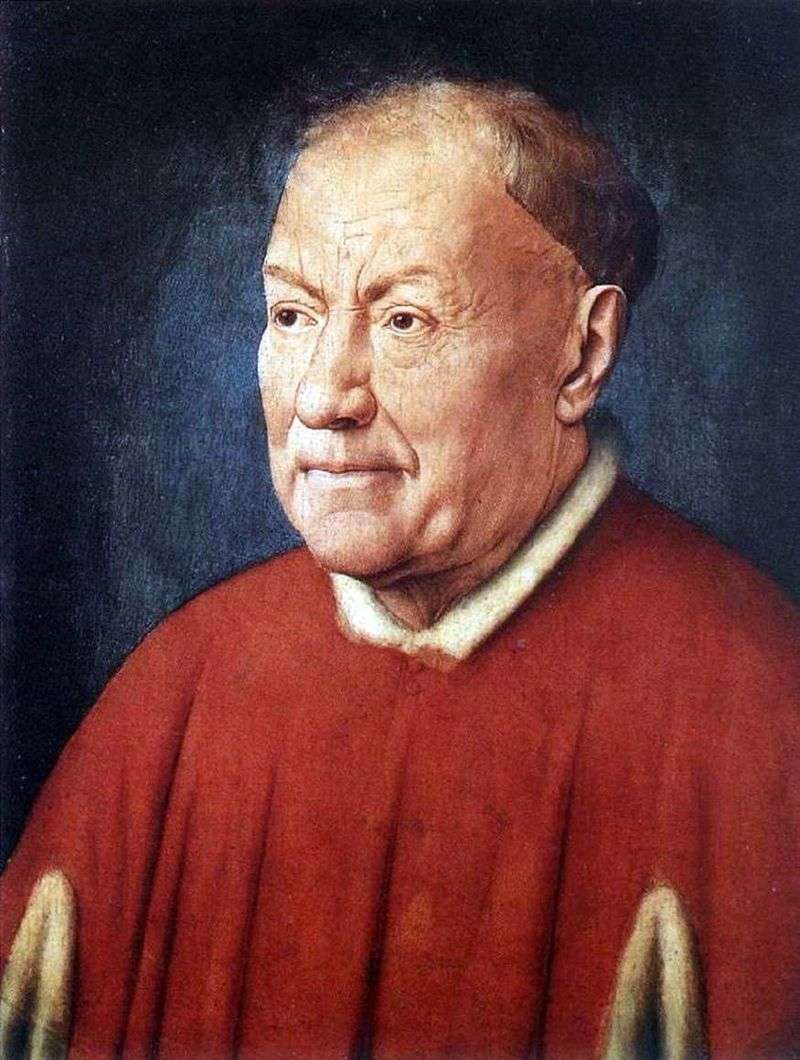
Jan van Eyck painted the one who came to the Burgundian court as the papal legate of Cardinal Niccolo Albergati in 1431. Jan van Eyck carefully transferred facial features to
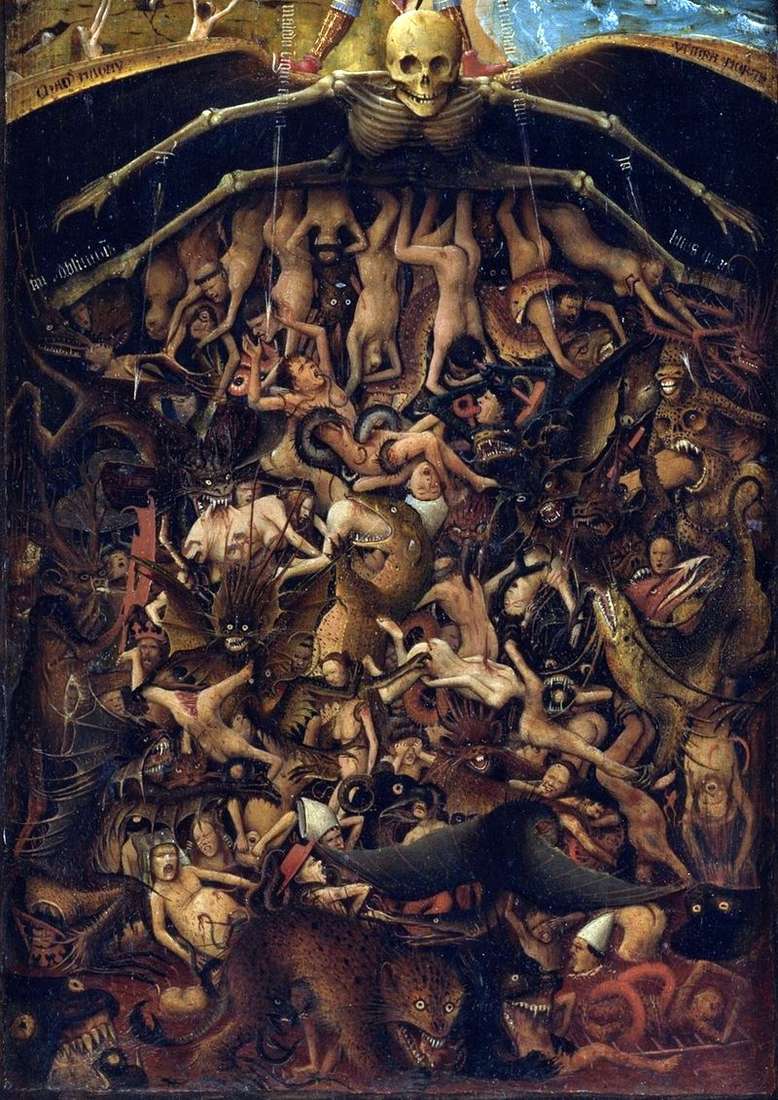
In addition to the “Ghent Altar”, there are a number of paintings that are attributed to either Jan van Eyck or his brother Hubert. In general, these things are very
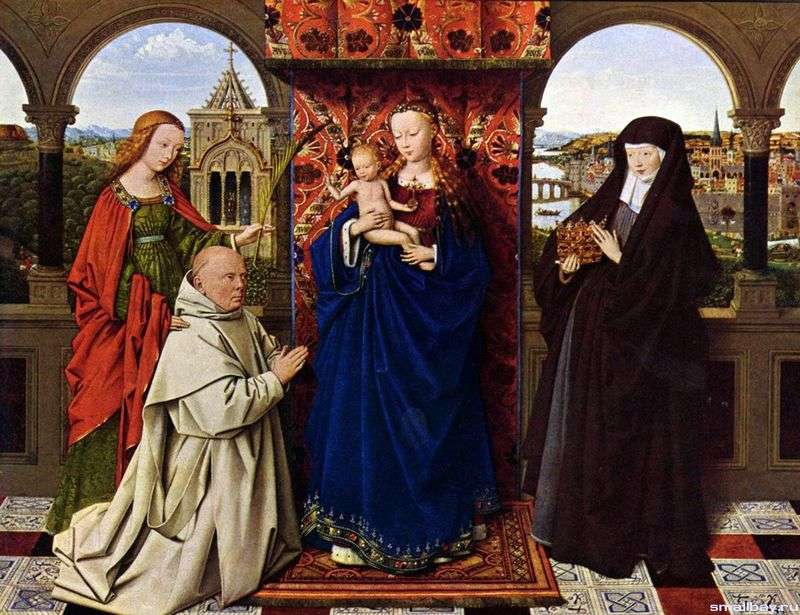
The painting “The Madonna with the Cartesian Monk” was painted by the artist around 1425. In the paintings of Jan van Eyck it is quite obvious that any object, which
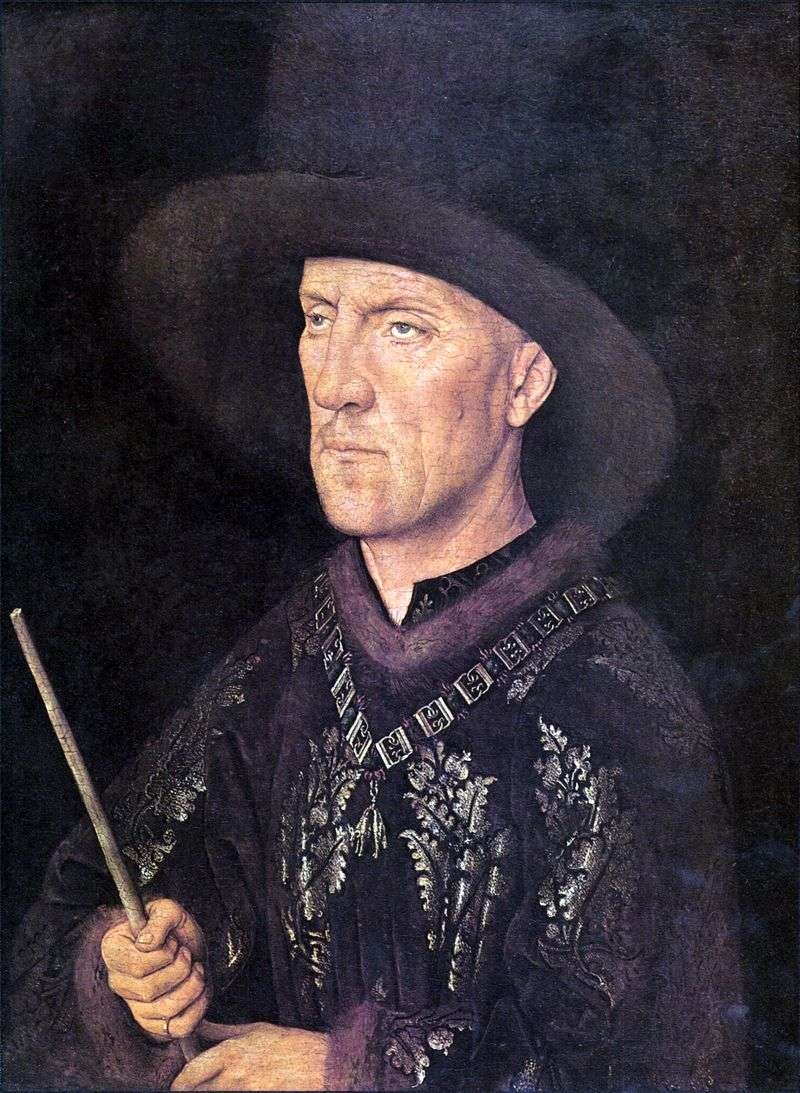
The painting “Portrait of Baudouin de Lanoi” was painted by the Dutch painter Jan van Eyck around 1435. The man in the portraits of Jan van Eyck and the bearer
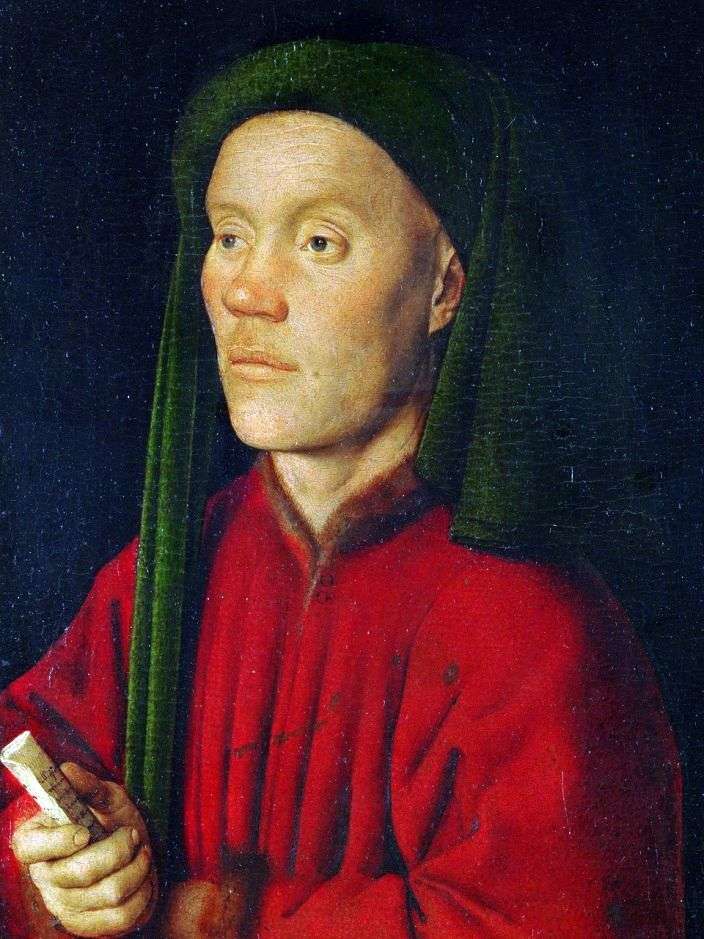
Eight portraits have come down to us, which with sufficient certainty can be called the works of Jan van Eyck. Let’s add to them. a few more works of this
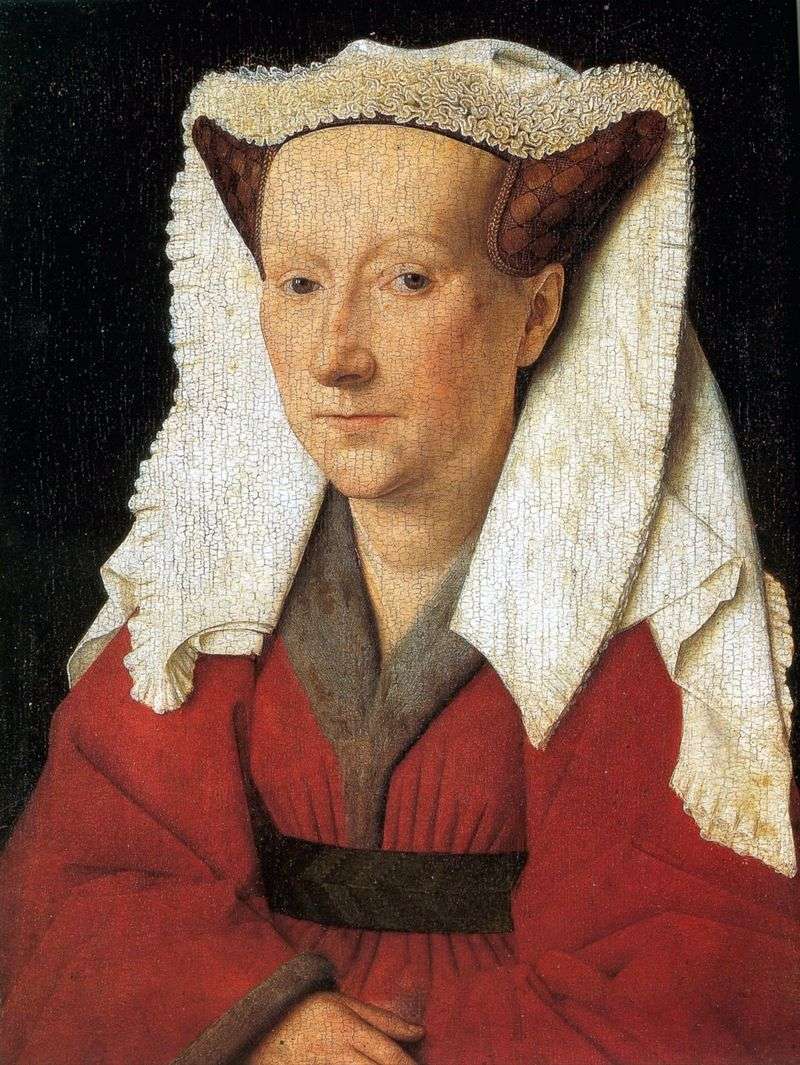
The most consistent new features of the method are embodied in the last portrait of the master – a portrait of his wife Margret van Eyck. Here, behind the character