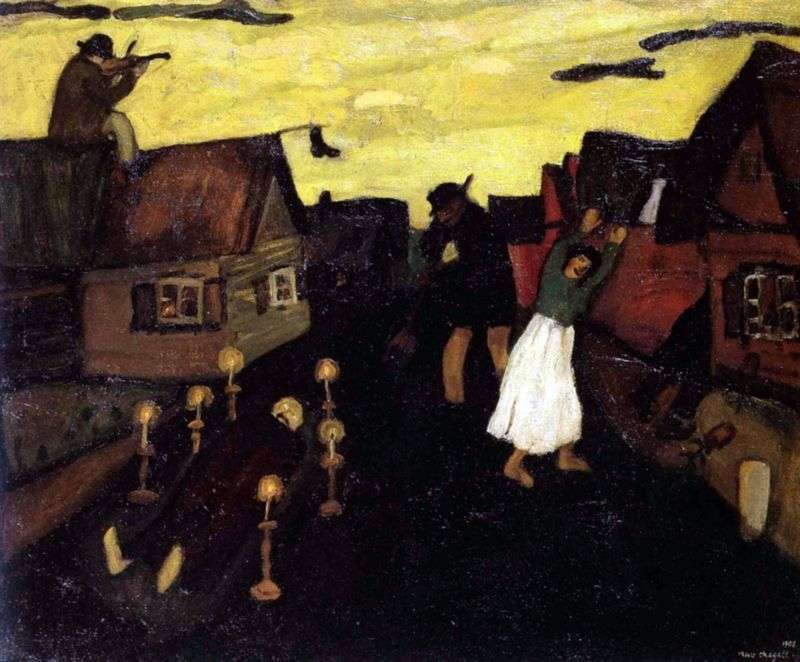
One of the 3 paintings presented by Chagall to the exhibition of works by students of the Zvantseva school. From this picture the artist began his creative creative biography. Its
Chagall Mark
One of the 3 paintings presented by Chagall to the exhibition of works by students of the Zvantseva school. From this picture the artist began his creative creative biography. Its
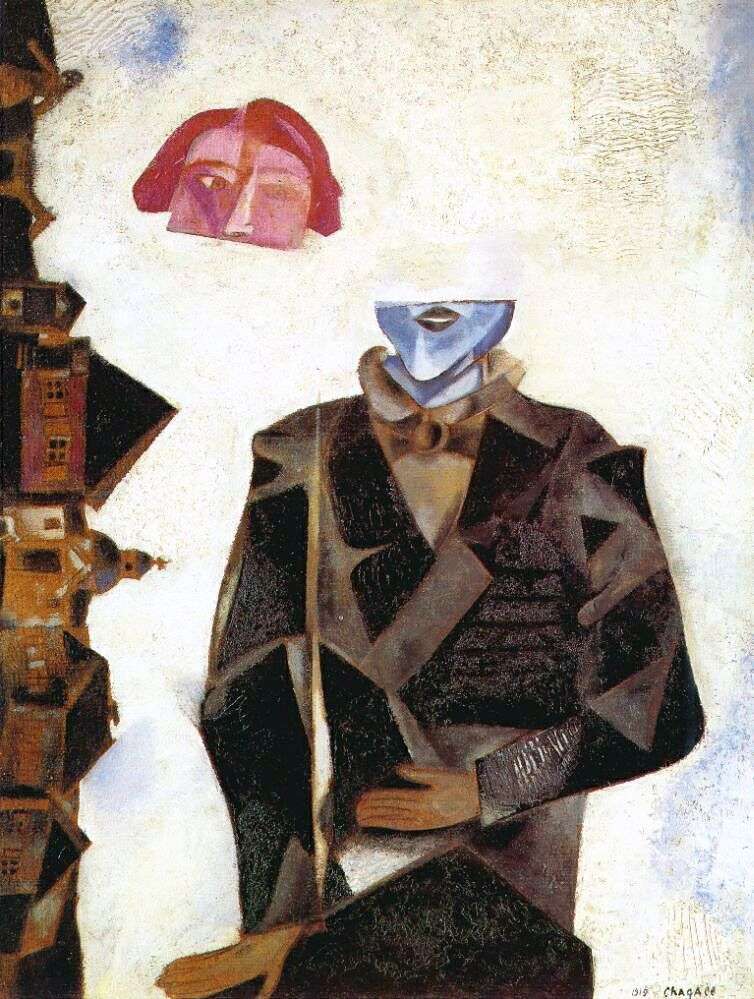
The painting is a vision of Chagall’s painting “over reality”. Returning from France to his native Vitebsk, the artist paints it with pleasure. In the opal-mother-of-pearl luminescence appears a fabulously
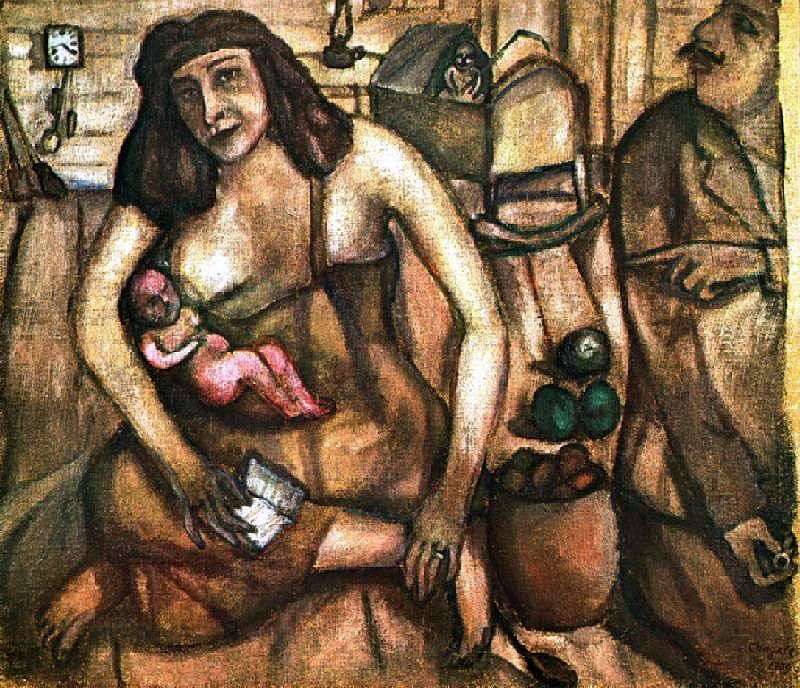
This picture – the development of the theme of motherhood and a peculiar variation of the gospel story. In the depiction of evangelical canons, Chagall introduces elements of Jewish interpretation.
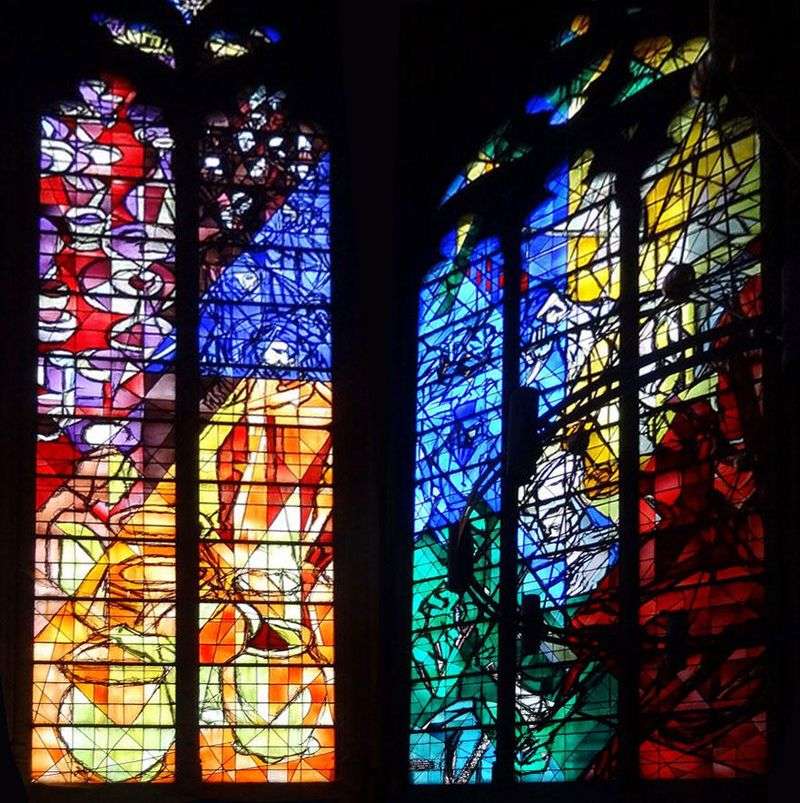
This large-scale work required Chagall more than 10 years. The main place was occupied by 11 compositions on the themes of the Old Testament: – the creation of man, –
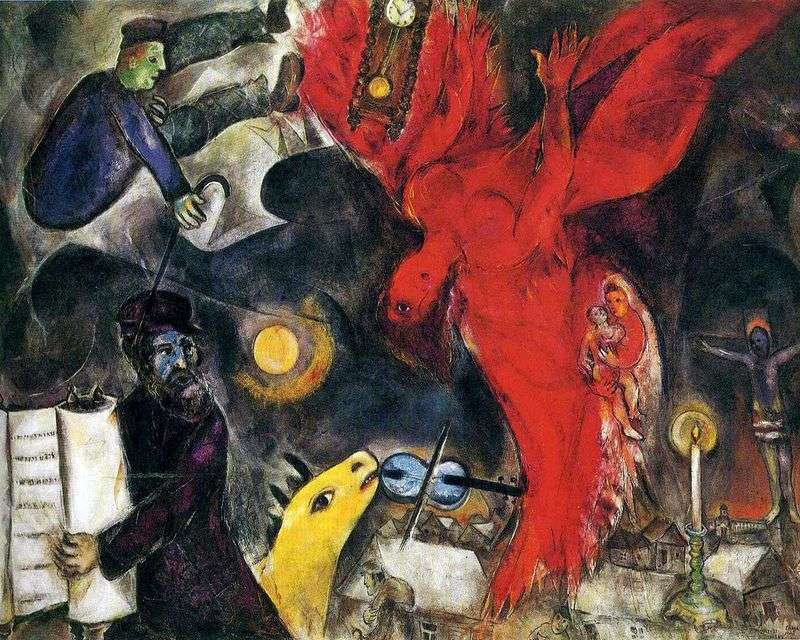
Chagall wrote this picture for 3 decades. In it, history is even more transformed into metahistory. His characters: – An old man, full of things of anxiety, pointing to the
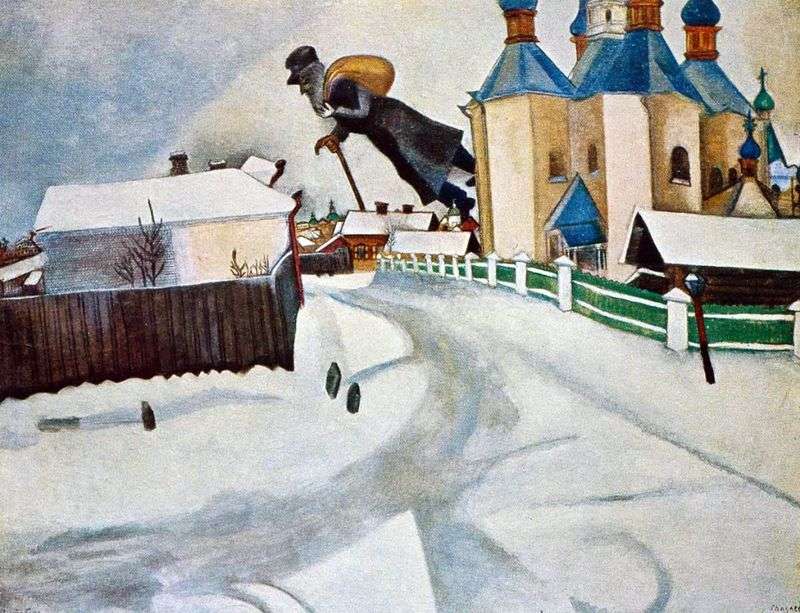
Vitebsk took a special place in the heart of the artist. Here the birthplace of Marc Chagall, with this place he compared the numerous cities where the master lived. Confirmation
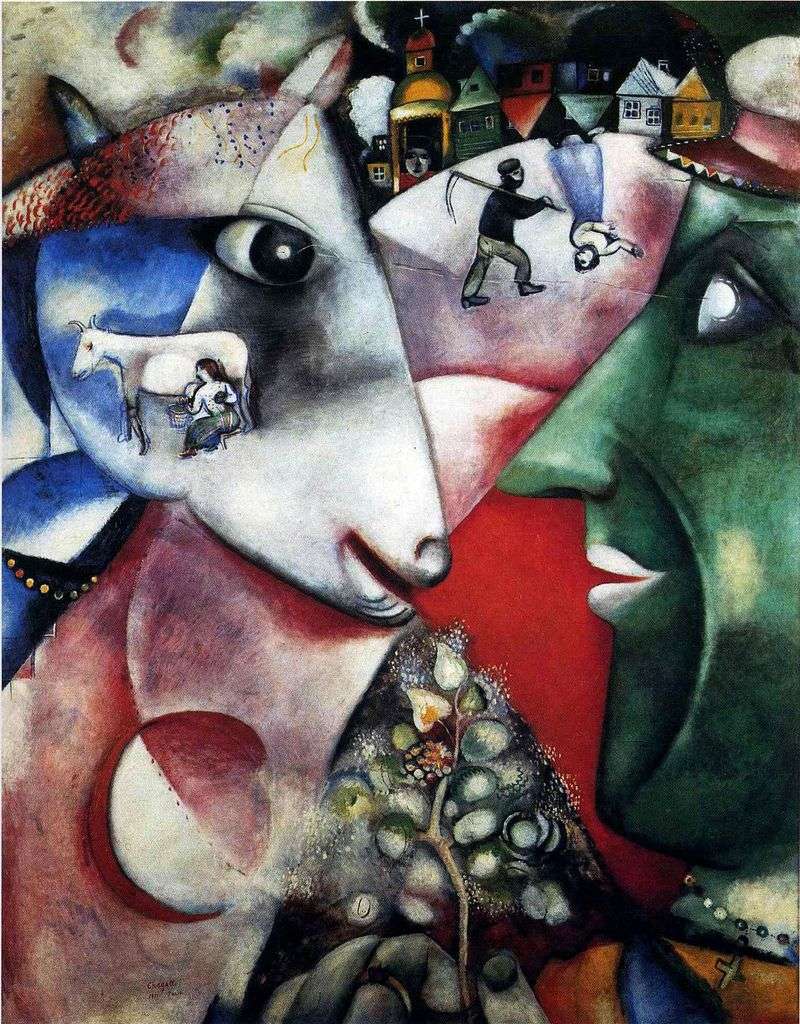
One of the most poetic allegories of the artist, a reflection of the duality of his consciousness. The name for the picture was invented by the French friend of Chagall
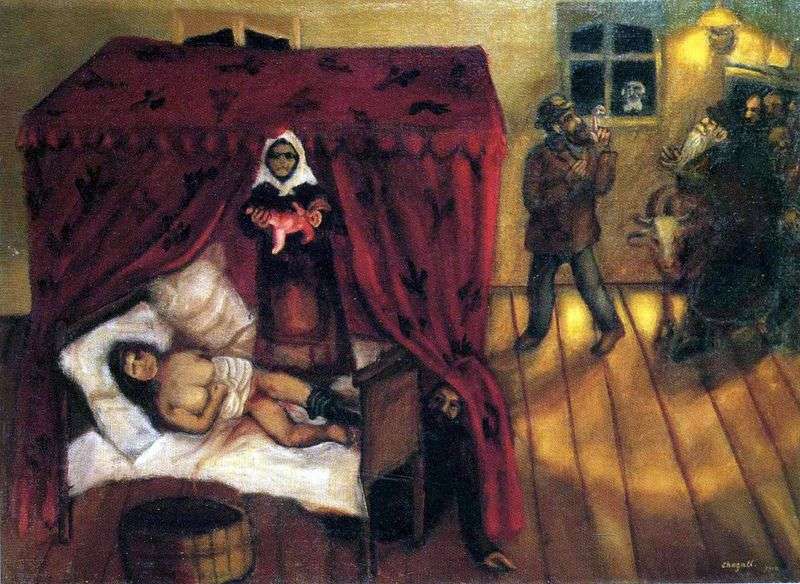
This picture is narrative and rich in details. Here one of the main principles of Chagall’s poetics was most clearly manifested: the use of ordinary and reduced details taken from
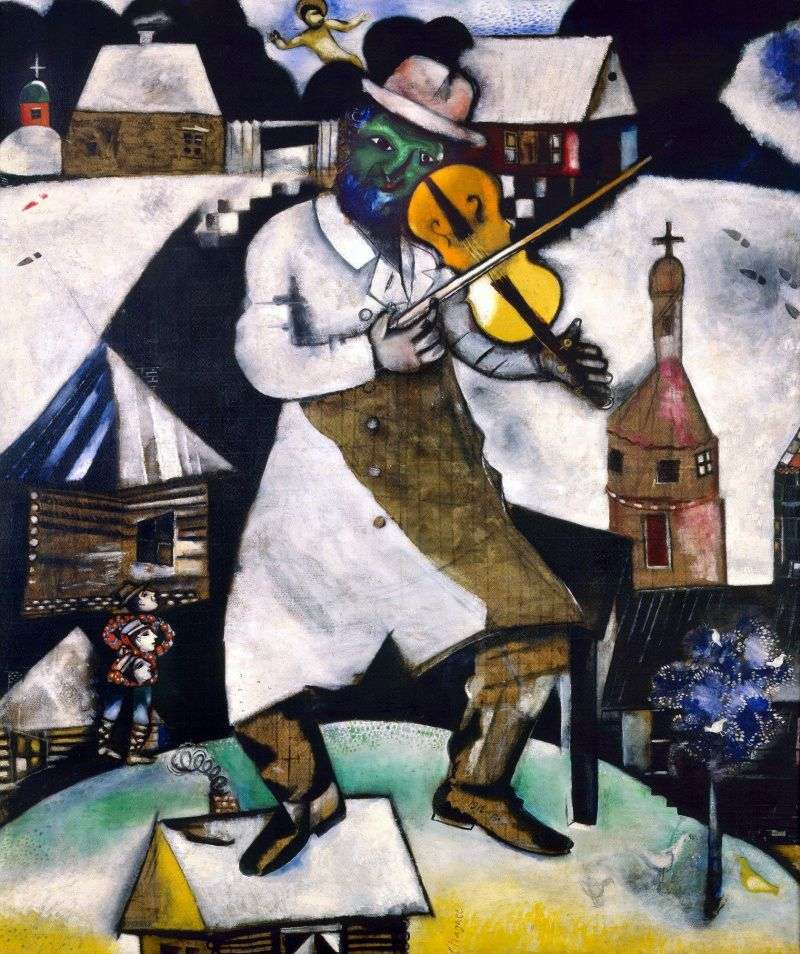
The picture depicts the inner struggle of man, his troubled state of mind. This is expressed in a number of elements, including color. The picture with the underlined religious and
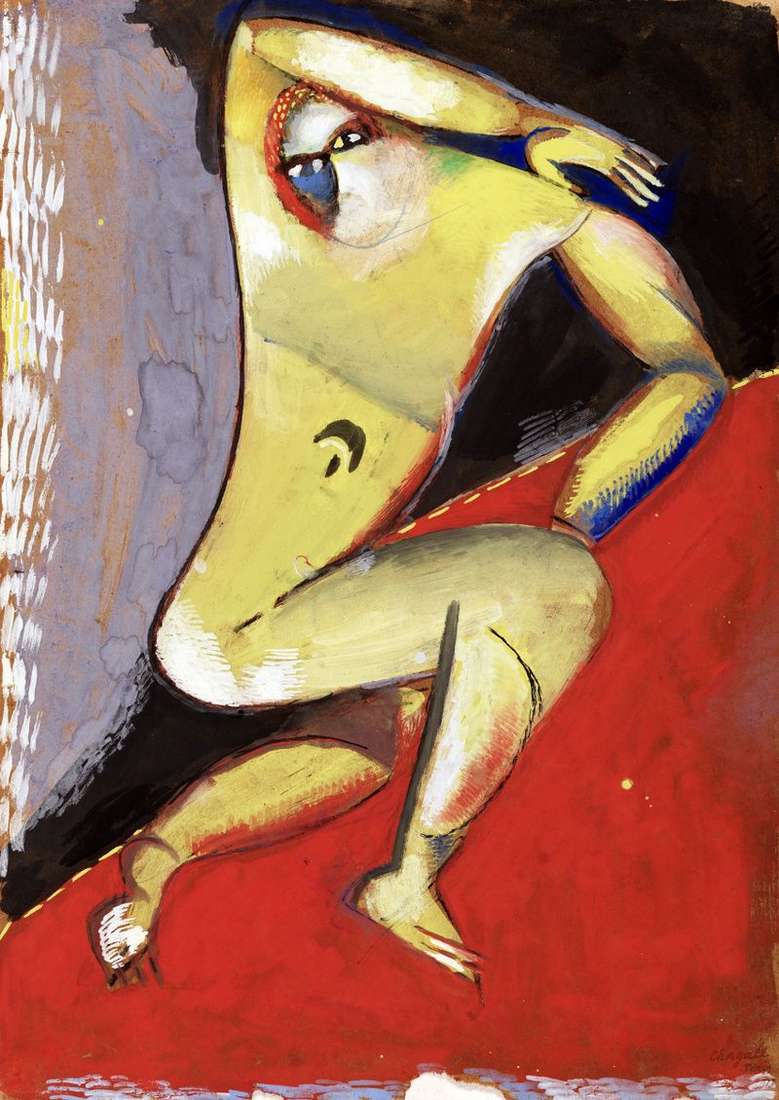
From 1911 to 1914 Mark Chagall lived in Paris, having arrived there with his teacher Lev Bakst and plunged into the French artistic life. His works of that time show
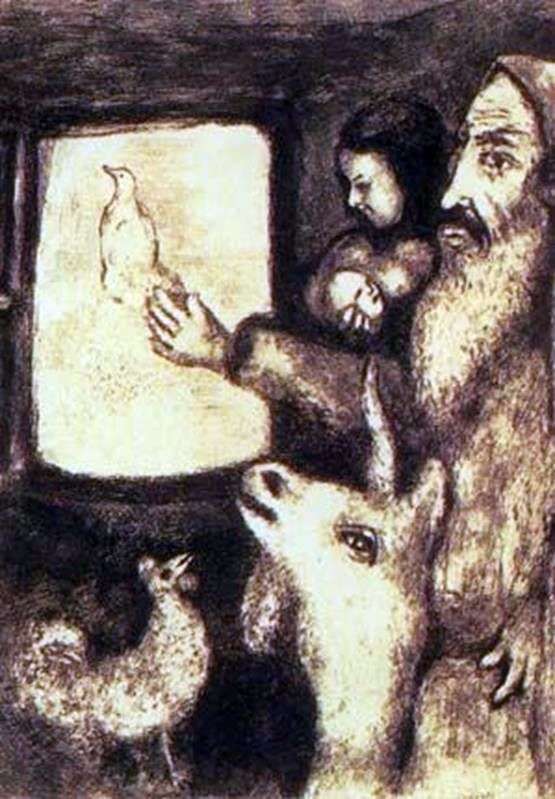
The art of engraving Chagall comprehended in Berlin, from Herman Struck, who wrote a classic study on this subject. Engaged sometimes engraving on wood and lithography, he still preferred them
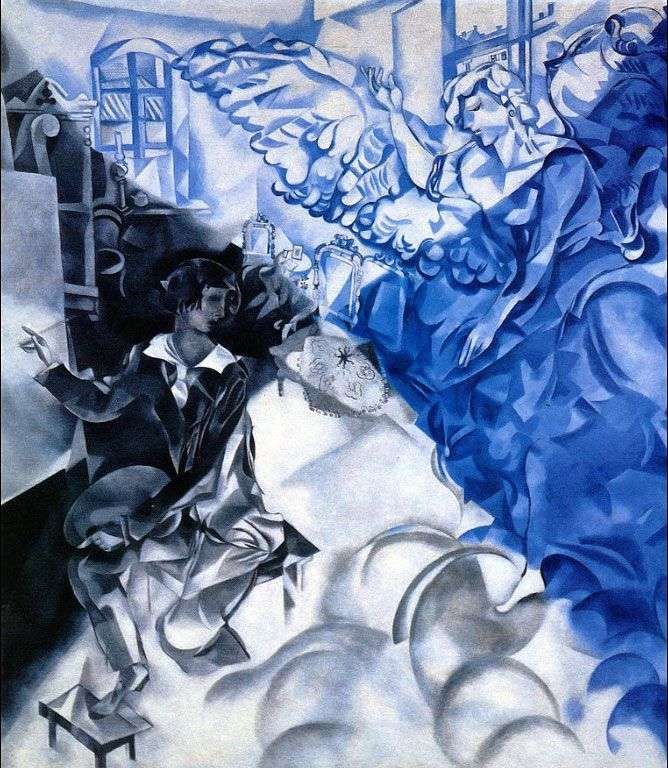
The picture indicates a return to the old techniques of the picturesque language. Chagall rethinks the stylistics of cubo-futurism, developed by Larionov and Goncharova. By its expression and plastic expressiveness,
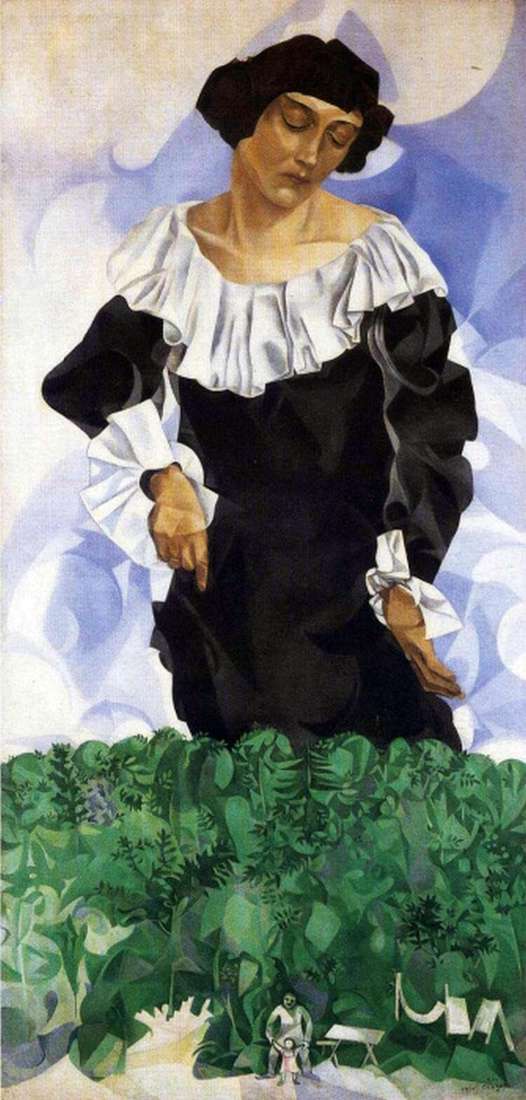
Mark repeatedly painted his beloved and his wife – Bella Rosenfeld, the daughter of a rich Russian jeweler. This portrait is the most famous image of this girl, in which
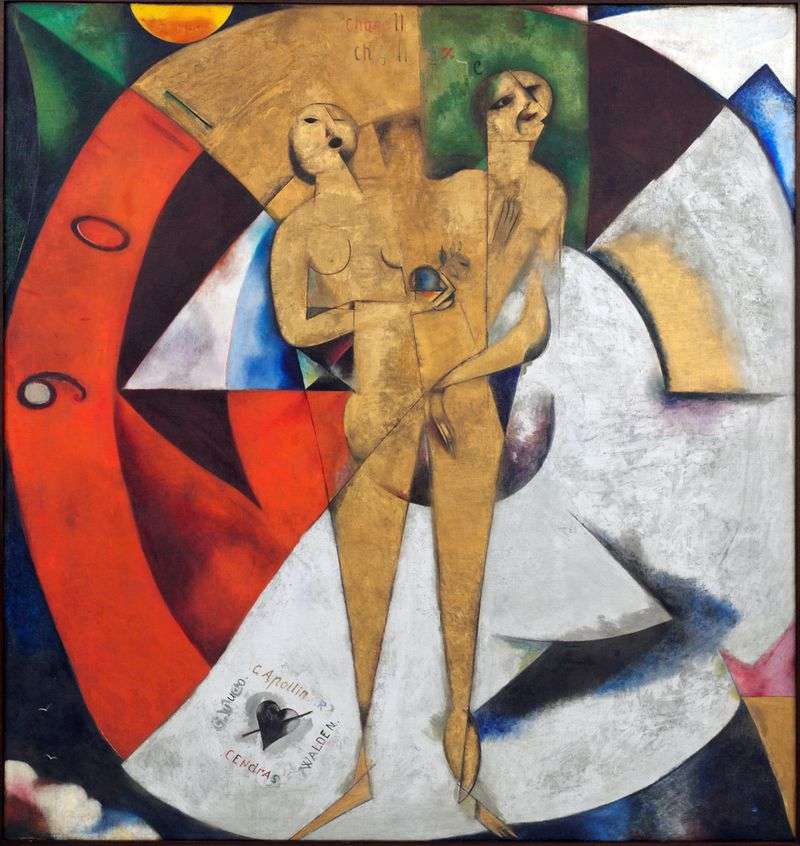
In 1910 Chagall moved to Paris. According to the historians and biographers of the artist, this is the best period of creativity in his career. The painting “Dedication to Apollinaire”,
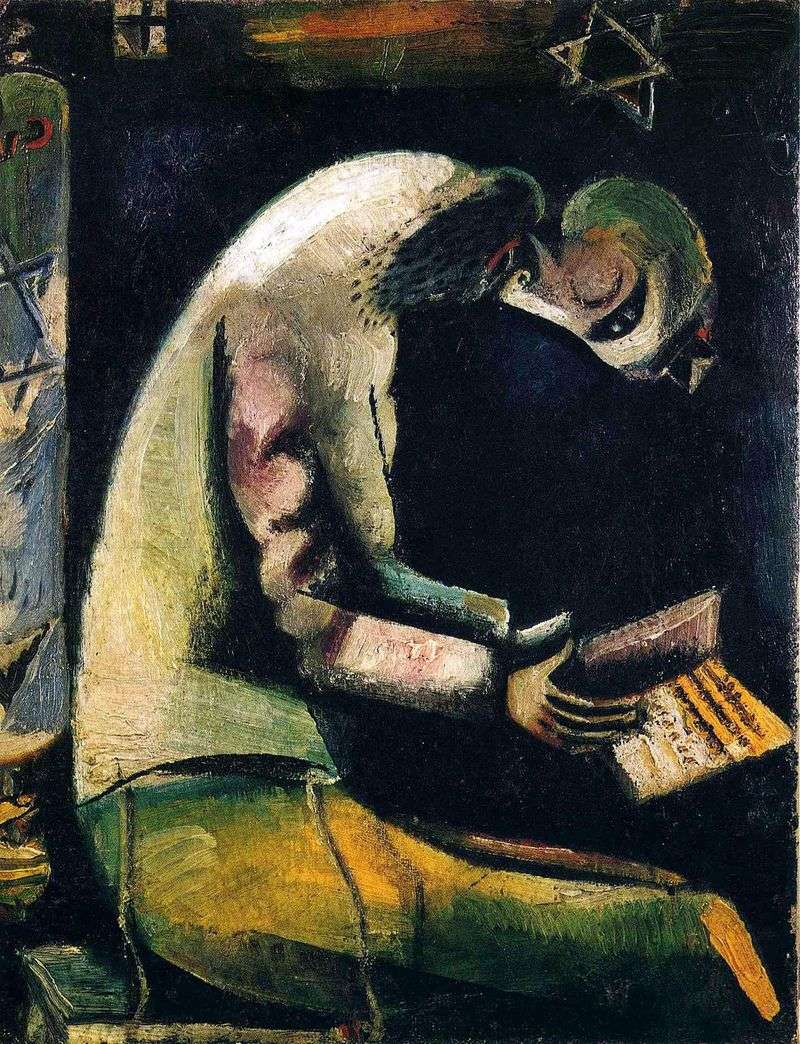
Despite the complex semantic load and unusual compositional solution, the image on the canvas is extremely expressive. An elderly Jew sits and holds a book in his hands, over which
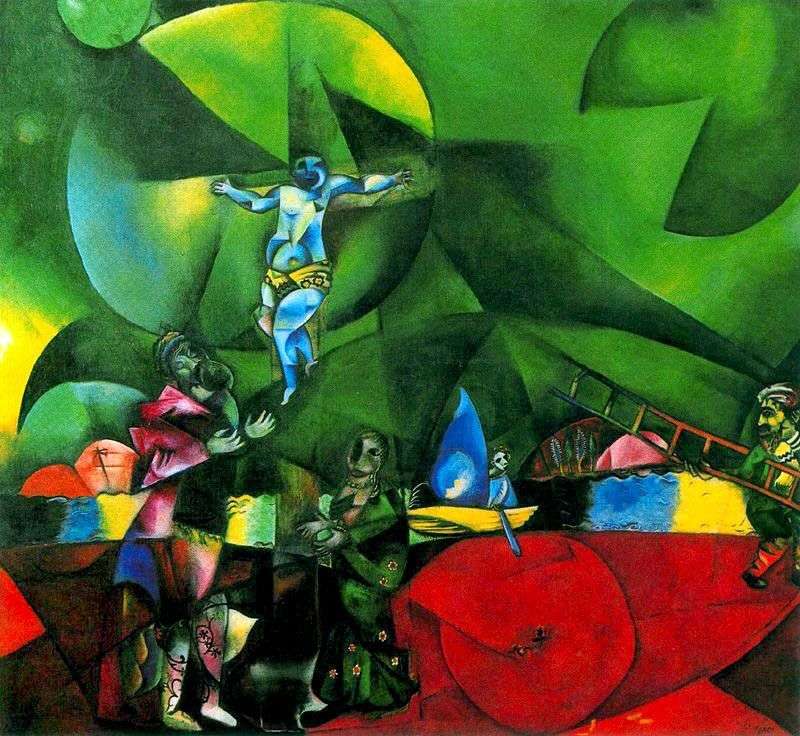
The writing of this painting by Chagall was inspired by old Russian-Byzantine icons. The original name is “Dedication to Christ”. The martyr in the sunny nimbus, to whom the artist
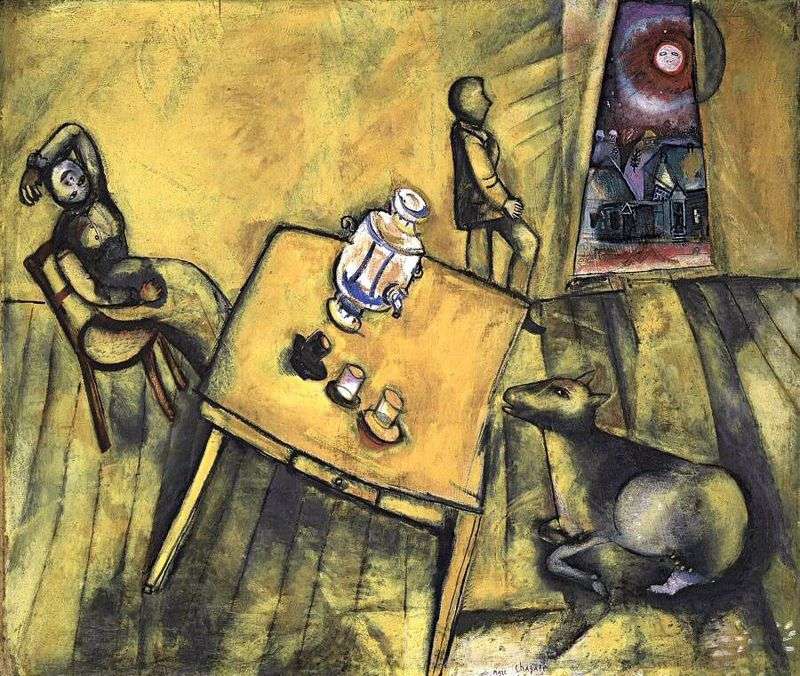
The painting got its name from the dominant yellow color, which is complemented by shades of contrasting tones – cherry, blue, pink, white. The viewer’s eyes are presented with the
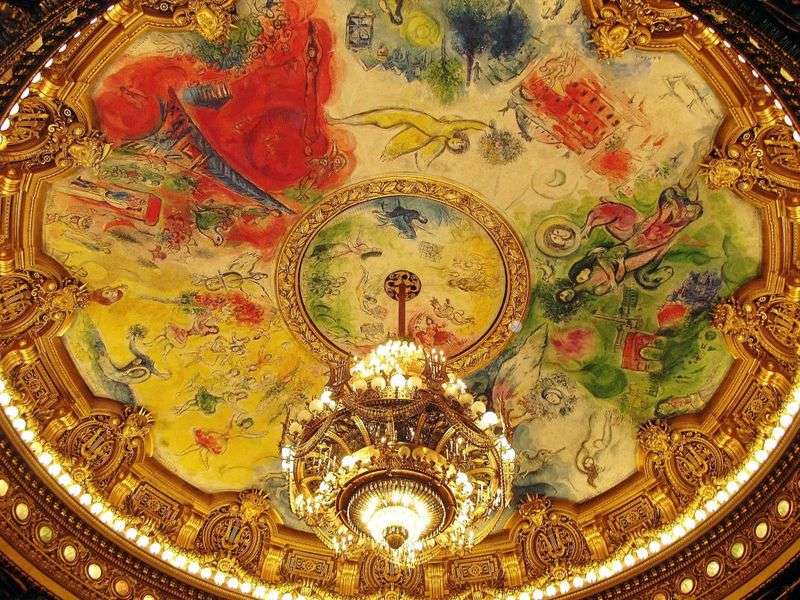
Having already achieved worldwide recognition, Chagall received a number of orders for the design of public buildings. The most famous of this kind of work is the ceiling painting of
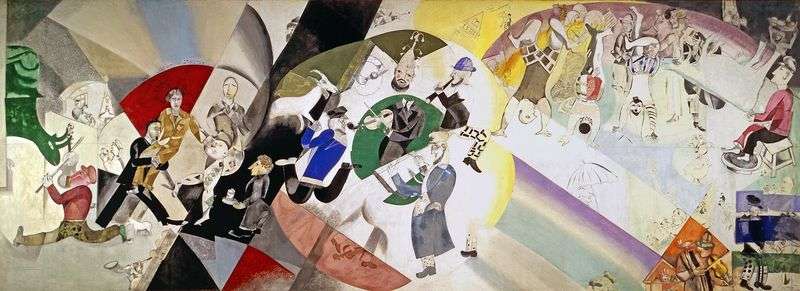
This was the central panel for the organized State Jewish Chamber Theater, which was converted from a manor house. It was 3 m high and 8 m long and was
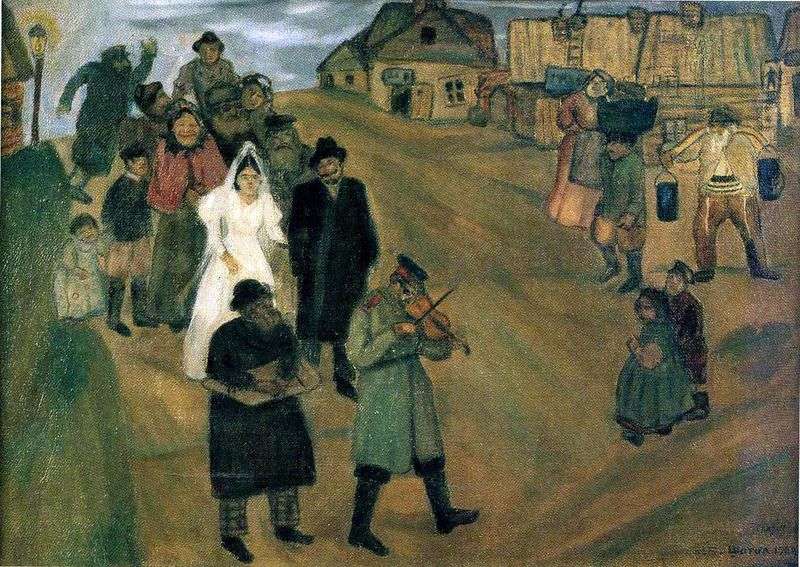
This is one of the first paintings written in Paris from a series of memories of his native Vitebsk. Contrasting catchy colors and spatial dynamism recreate the festive atmosphere of
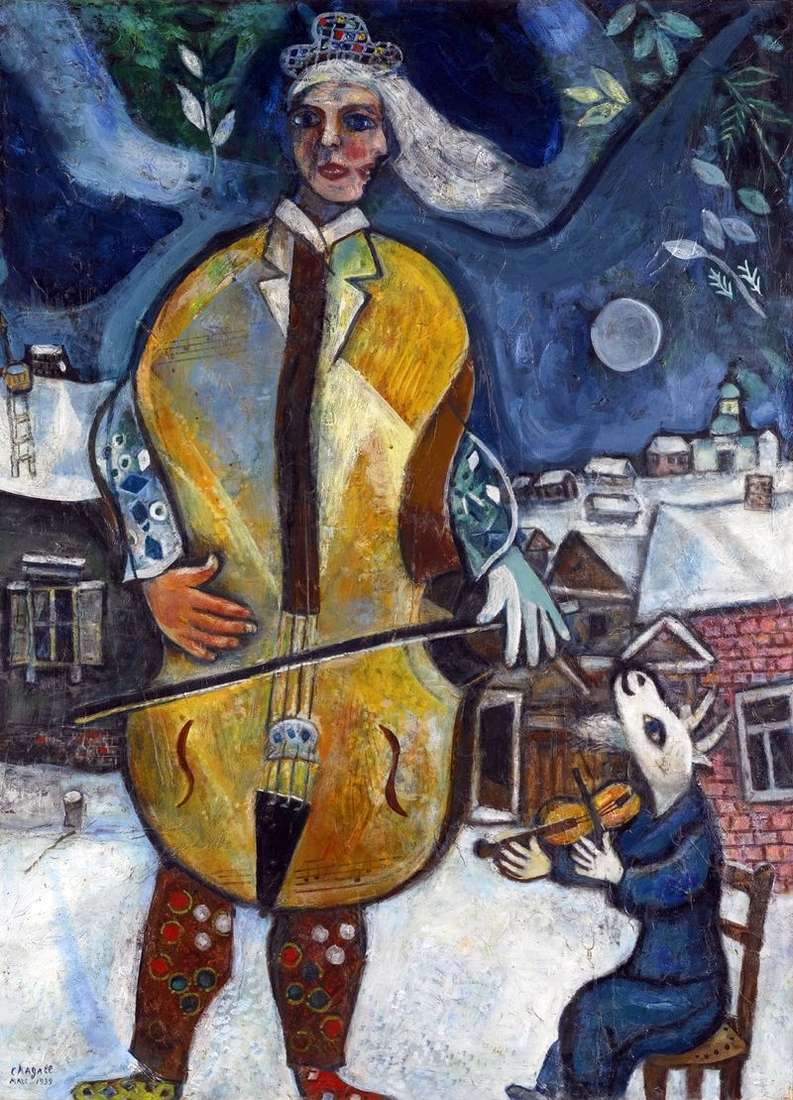
One of the bright and capacious paintings of Chagall is “The Cellist.” On it – full of anxiety and creative impulse musician, playing the cello, which is his body. In